How to become a cleaner in the UK
No qualifications, no experience, no problem. The honest route map from deciding to clean for a living to your first paid shift.
You become a cleaner in the UK by applying directly: no qualifications or licences are required, and employers train new starters on the job. What gets you hired is reliability, references from any kind of work, and proof of your right to work. From April 2026 every employed cleaning job must pay at least£12.71 an hour if you are 21 or over, and the fastest routes in, contract cleaning firms and agencies, commonly get people working within one to two weeks.
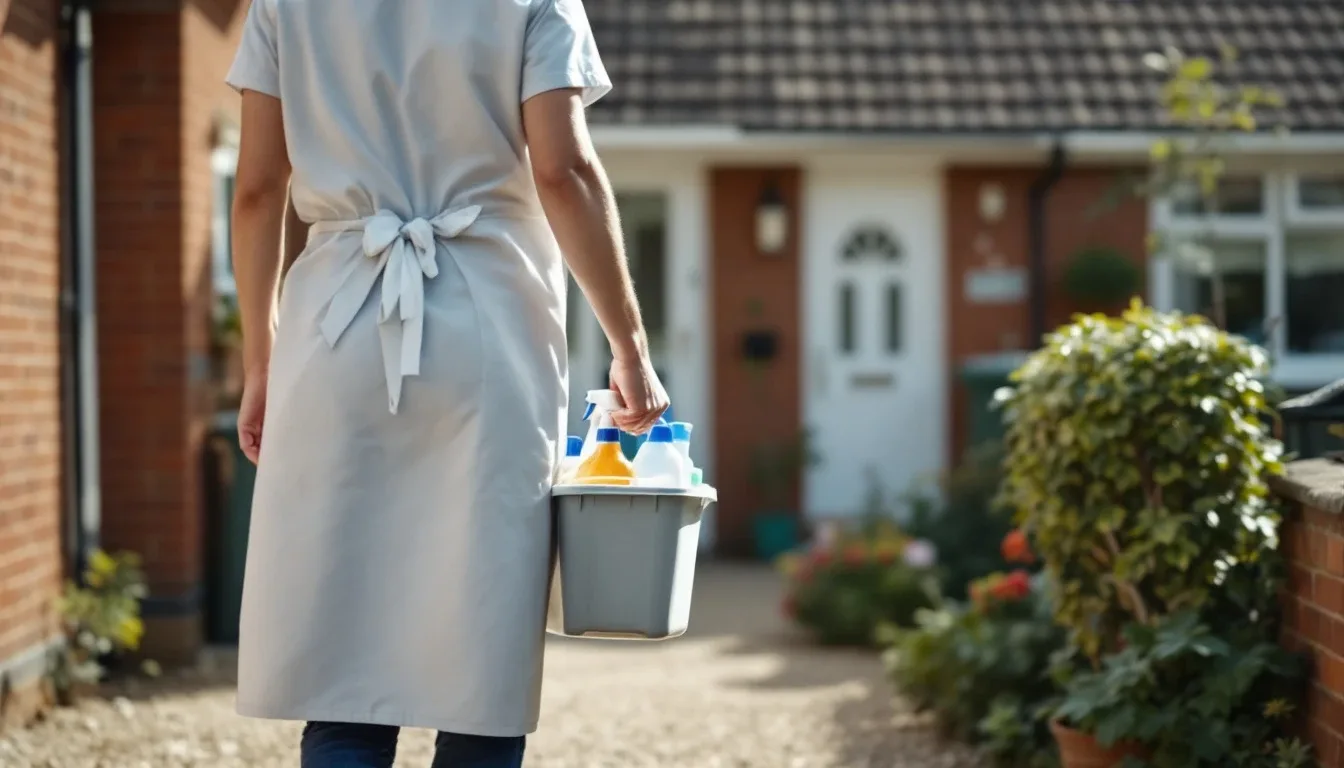
First job of the day: arriving at the client's front door with the kit.
Do you need qualifications?
No. There is no licence, no certificate and no course you must complete before taking a cleaning job in the UK. The industry trains on the job: your first employer shows you their specification, their chemicals and their routines, and you learn by doing them. Formal training exists, the British Institute of Cleaning Science (BICSc) certifies task skills, but where an advert mentions it, the employer provides and pays for it. Nobody expects a new starter to arrive certified.
What the sector does have is a hard legal pay floor. From 1 April 2026 every employed cleaner aged 21 or over must be paid at least £12.71 an hour, and 18 to 20 year olds at least£10.851. That covers training time and trial shifts too. The barrier to entry is not paperwork. It is whether an employer believes you will turn up, on time, every shift, without being watched. Everything in your application should speak to that.
The four routes into cleaning work
Contract cleaning and facilities companies. The volume route. Firms like Mitie, OCS and ISS hold thousands of office, retail and public-building contracts and hire continuously, mostly for part-time early and evening shifts. Onboarding is quick and structured, cover work is always available, and the supervisor ladder is real. If you want to be working within a fortnight, start with theoffice cleaning board.
Agencies. Domestic agencies match cleaners to households and handle finding the clients, which makes them the easy entry into daytime house cleaning. Temp agencies also fill short-notice commercial and event shifts, useful for testing the work before committing. Browselive domestic cleaning jobs to see both kinds.
Direct employers. Hotels recruit room attendants year-round, andhousekeeping is the niche with the clearest management ladder. Schools, councils and academy trusts hire for term-time after-school shifts that fit around childcare. Care homes, gyms and leisure centres advertise directly too. Direct roles sometimes come with better sick pay and pensions than contract work, so read the whole advert, not just the hourly rate.
Self-employment. A real route, but rarely the first one. Building your own domestic round pays more per hour once it is full, and most people who do it well spent time employed first, learning speed and standards on someone else's payroll. When you are ready, theself-employed cleaner guide covers rates, insurance and finding clients.
What do employers actually check?
Three things, and none of them is a qualification.
Right to work. Every UK employer must check you can legally work here before you start, using a passport, birth certificate combination or an online share code2. Have the document ready at interview and you remove the most common cause of delay.
References. Usually two. They do not need to be from cleaning, or even from paid work. A former employer in any sector, a volunteering organiser or a character referee who is not family all work. What the referee is really being asked is: did this person show up reliably?
Sometimes, a DBS check. This depends entirely on the setting. School cleaning needs an enhanced DBS check (£49.50), which the employer must arrange through a registered body and, by convention across the sector, pays for3. You cannot apply for an enhanced check yourself. Ordinary domestic and office work has no legal DBS requirement, though a basic check (£21.50, applied for by you on gov.uk) is a cheap trust signal for house cleaning4. The full picture is in our guide toDBS checks for cleaners.
One rule to carry into every application: legitimate employers never ask you to pay to get a job. An advert demanding an upfront fee for a DBS, "registration" or training kit is a scam, full stop. We keep a plain-English list of the current cons in cleaning job scams to spot before you apply.
- Qualifications required
- None, training is on the job
- Legal minimum pay, 21 and over
- £12.71/hour
- Basic DBS (optional trust signal)
- £21.50, self-applied
- Enhanced DBS for school roles
- £49.50, employer arranges and pays
- Typical time from application to first shift
- 1 to 2 weeks
Where the vacancies live
Start with our live cleaning job boards. They pull fresh vacancies from the major job APIs every day, split by niche, from offices anddomestic work toend of tenancy teams, and by city for London, Manchester, Birmingham, Leeds, Glasgow and Liverpool. Because cleaning turnover is constant, the same boards reward checking twice a week rather than once a month.
Beyond that: the government's own Find a job service lists thousands of cleaning roles, including council and school vacancies that never reach commercial boards5. The big facilities companies and hotel chains run their own careers pages, worth checking for buildings near you. Local community groups carry genuine domestic adverts, but they carry the fakes too, so apply the never-pay rule and read the scams guide before answering a private-client post.
How to apply with no experience
Keep the CV to one page. Recruiters filling cleaning shifts scan for three lines: where you live, when you can work, and evidence you are reliable. Put your availability near the top, be specific ("weekday mornings from 5am, up to 20 hours"), and list any work at all, since shelf-stacking, care work and delivery rounds all prove the thing that matters. If the page still looks thin, ourcleaning CV with no experience guide has a structure that fills it honestly.
Apply to several roles at once and answer the phone when it rings. Speed matters more than polish: many supervisors interview the first three suitable applicants and stop there. The interview itself is usually short and practical, fifteen minutes on travel, early starts and trust, and we have listedthe questions supervisors really ask with sensible answers. It helps to have skimmed the job description guide first, so nothing about the duties surprises you.
What your first week looks like
Expect an induction shift, not a deep-end shift. A supervisor walks you round the building, shows you the specification (the task list that defines the job), the storeroom and the colour-coding system that keeps washroom cloths away from kitchen ones. You will get a short briefing on the chemicals you will handle, which is the COSHH training adverts mention, and then you clean alongside an experienced colleague for the first few shifts.
Two honest warnings. First, your feet and back will notice week one; the job is genuinely physical and the adjustment is real, then it passes. Second, you will be slower than the spec time to begin with. That is expected. Supervisors care that the standard is right first; speed arrives on its own within a few weeks. And a reminder worth repeating: induction, training and trial shifts are working time, paid at least at the legal minimum1. An employer offering an unpaid "trial week" has told you what kind of employer they are.
Which niche should you start in?
Offices are the classic entry point: the most vacancies, the quickest starts, and shifts that stack around another job or study. Domestic work suits people who want daytime hours, school cleaning fits the school run with the employer handling the DBS, and hotel housekeeping offers sociable daytime shifts plus a genuine promotion ladder. Specialist niches pay best,hoarder and extreme cleaning adverts commonly sit in the£13 to £16 range, but most firms there prefer some general experience first, so treat them as the second job, not the first. For the full pay picture across every niche, seewhat cleaning jobs pay in 2026, then pick a board on thejobs page and start applying.
Questions people ask
Can I become a cleaner with no experience?
Yes. Cleaning is one of the few sectors where most employers expect new starters to arrive without experience and train them on the job. What adverts screen for is reliability, references from any kind of work, and the right to work in the UK. Your first employer teaches the rest.
How long does it take to get a cleaning job?
Faster than almost any other sector. Contract cleaning companies and agencies often interview within days of an application and start people within one to two weeks, because turnover is constant and vacancies stay open. School roles take longer, since the employer has to arrange an enhanced DBS check before you start.
Do I need a DBS check before I apply?
No. For school and similar roles the employer arranges and pays for the enhanced check (£49.50) as part of onboarding, and you cannot apply for one yourself. For domestic work there is no legal requirement at all, though a basic check (£21.50, applied for on gov.uk) is a useful trust signal if you plan to work in people's homes.
Do I need my own equipment to start?
Not in employed work. Contract cleaners, hotels and schools supply everything: machines, chemicals, cloths and usually a uniform. You only buy kit if you go self-employed for domestic clients, and even then many households prefer you to use their own products, so the starting outlay is small.
- GOV.UK, "National Living Wage increases to £12.71 per hour", gov.uk/government/news/national-living-wage-increases-to-1271-per-hour. Accessed 17 July 2026.
- GOV.UK, "Prove your right to work to an employer", gov.uk/prove-right-to-work. Accessed 17 July 2026.
- GOV.UK, "DBS checks: guidance for employers", gov.uk/guidance/dbs-check-requests-guidance-for-employers. Accessed 17 July 2026.
- GOV.UK, "Request a basic DBS check", gov.uk/request-copy-criminal-record. Accessed 17 July 2026.
- GOV.UK, "Find a job", gov.uk/find-a-job. Accessed 17 July 2026.
Last reviewed 17 July 2026. Hiring practice changes slowly, but the statutory pay rates and DBS fees are checked against the sources above.